
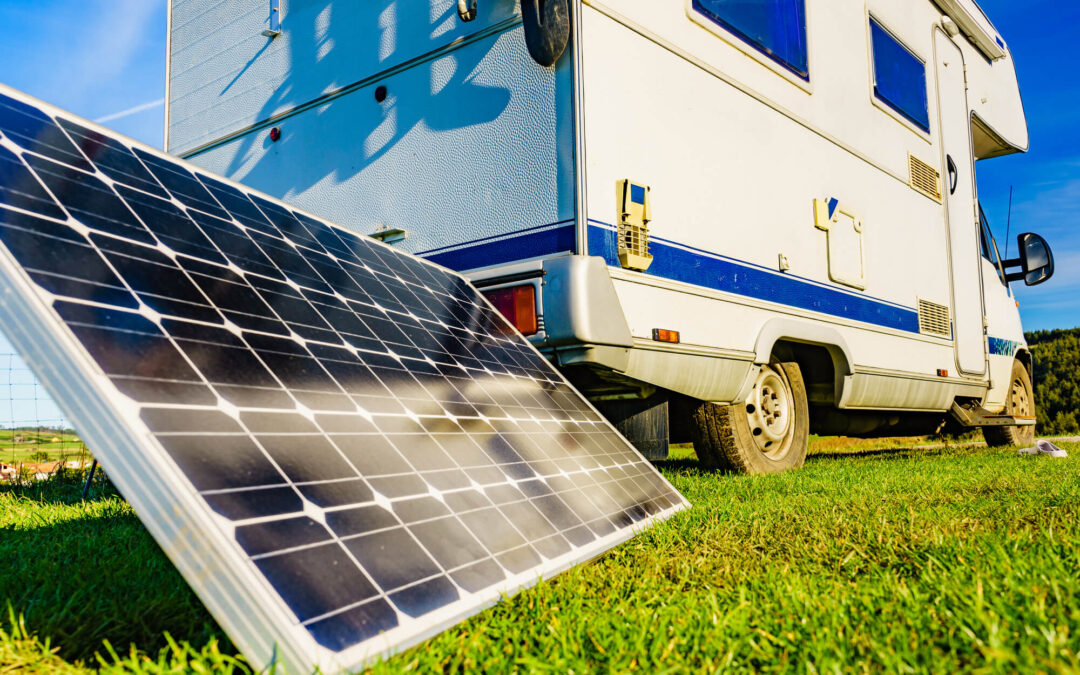
Off-grid RV power management is a fundamentally different challenge than plugged-in camping. There’s no shore power to fall back on, no unlimited supply to draw from, and no reset button when the math doesn’t work out. Understanding how to balance the power your rig consumes against what your batteries can store and your solar or generator can produce isn’t complicated, but it does require intentional planning before you leave the hookup behind.
RV Power Management Starts With Auditing What You Actually Use
The most common dry camping mistake isn’t having too little solar or too small a battery bank; it’s not knowing how much power the rig actually consumes. Every appliance in the RV draws current, and the combination of the refrigerator cycling, the water pump running, the lighting load, phone chargers, and fans or entertainment equipment adds up to a daily consumption number most RVers have never calculated. Before investing in more panels or batteries, spend a few days monitoring actual usage with a battery monitor that tracks amp-hours in and out. The number is almost always higher than estimated, and knowing it precisely is the foundation of effective power management off-grid. A battery monitor that displays real-time draw and cumulative daily usage is one of the most useful upgrades an off-grid camper can make, because it turns guesswork into data.
Reduce the Load Before You Chase More Supply
Effective power management in a dry camping context rewards efficiency as much as capacity. The load reduction habits that extend dry camping capability don’t require adding a single panel or amp-hour of storage. Switching to LED lighting, running a 12-volt fan instead of the roof air conditioner in mild conditions, minimizing the refrigerator compressor during peak afternoon heat, and charging devices during generator run time rather than overnight from the battery bank all add up to meaningful gains without touching the electrical system.
RV Power Management Off-Grid Means Timing Your Generator Smarter
If a generator is part of the equation, run time matters as much as run frequency. Most battery banks charge fastest in the first portion of the charging cycle and taper off as they approach full. Running a generator for two focused hours during the peak charging window produces more usable power than the same generator running at low load throughout the day. Pairing generator run time with high-draw tasks maximizes the value of the fuel and minimizes the noise hours that affect both the camper and the surrounding site. Once the bank is charged and the devices are topped off, shutting the generator down and living off stored power is the approach that keeps the experience closer to the peaceful off-grid camping most people are after.
The RVers who make dry camping work consistently are the ones who understand their consumption, reduce where they can, and time their generation efficiently. That combination of awareness, discipline, and smart scheduling is the core of power management that actually holds up mile after mile off the grid. More capacity helps, but it helps a lot more when it’s paired with a clear understanding of what’s drawing from it and when.
B&B RV Inspections offers RV Inspections and services in North Carolina, South Carolina, and Virginia. Contact us to schedule your services.